Aliso Viejo, CA • Blog
AC Repair or Replacement? How to Decide
Repair or replace is decided by the fault, the repair history, and how the system performs on the hottest days — not by age alone.
24/7 emergency line • Local Aliso Viejo coverage • Clear diagnosis first
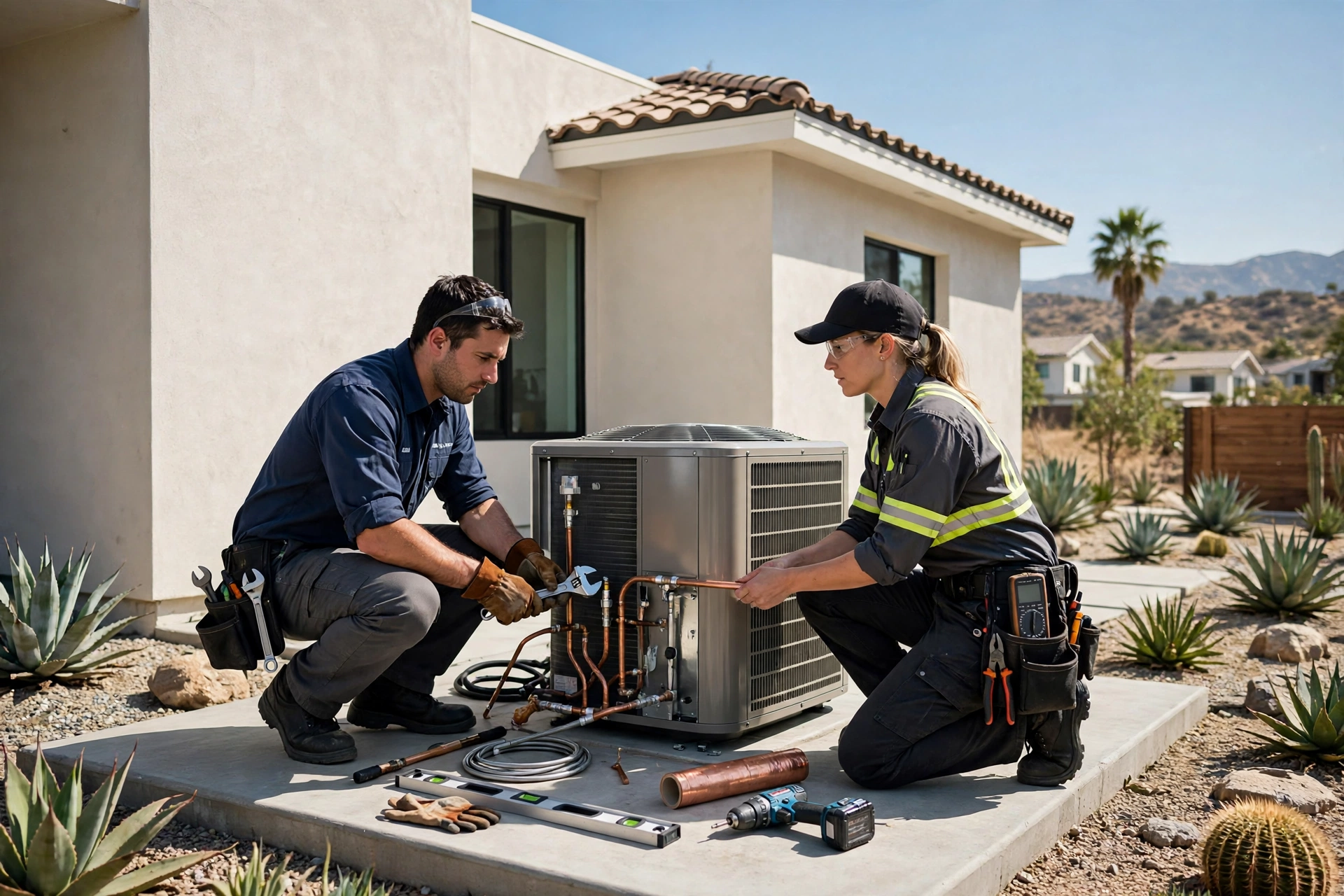
Every aging air conditioner reaches a point where the question changes from what is wrong with it to whether it is worth fixing. The system still cools, but it has needed repairs before. A part has failed again, and the choice is between another repair and a new system. The answer is not in the age alone — it is in the fault, the repair history, and how the system performs on the hottest days.
This guide walks through that decision the way a diagnosis does: start with the fault, look at the signs the system is reaching the end of its service life, understand sizing, and know what replacement involves in an Aliso Viejo home. It ends with the questions to ask before you decide, so the choice is based on facts rather than pressure.
Start With the Fault, Not the Age
A 30-year-old system with a failed capacitor is a repair. The part is small, the rest of the system is sound, and the repair restores cooling for years. A 30-year-old system with a failed compressor is a different conversation: the part is large, the rest of the system is the same age, and the repair may only be the first of several. The fault decides, not the calendar.
Callers reach that point in plain words: the HVAC unit needs to be replaced because it stopped working, or a homeowner asks for a quote on a new air conditioner. Both start with a diagnosis, because the fault is what the decision is about. A diagnosis lists the part that failed, the condition of the other components, and whether the system still cools the home on the hottest days.
Repair history matters as much as the current fault. A system that has run for years without a repair and now needs one part is a different case from a system that has needed a repair every summer. The pattern of failures tells you more than any single fault, and a technician who has seen the system before can read that pattern.
The Signs a System Is Reaching the End of Its Service Life
The clearest sign is cooling that no longer keeps up. The system runs all afternoon and the house never reaches the set temperature, or the upstairs rooms stay warm while the downstairs cools. A system that cannot cool the home on an 85-degree day is not going to do better on a 95-degree heat wave, and the gap will only widen.
Rising repair frequency is the second sign. One repair in five years is normal wear; a repair every summer is a system wearing out part by part. A third sign is noise: a compressor that groans on startup, a fan motor that squeals, or a unit that rattles. Those sounds are wear, and wear does not reverse.
The fourth sign is the one callers describe most directly: the system is old and it is on its way out. A homeowner who has lived with the same unit for three decades knows how it sounds and how it cools, and when both have changed, the system is telling its owner what the diagnosis will confirm. Trusting that sense is reasonable — and a diagnosis will either confirm it or show the fault is smaller than it seemed.
A fifth sign is one you feel rather than hear: humidity. A system that cools the air but leaves the house damp is short cycling, or it is oversized for the home, cooling the air so fast that it never runs long enough to pull moisture out. A home that feels sticky at 74 degrees is telling you the system is not doing its full job, even if the thermometer says the temperature is right. Humidity, uneven rooms, and rising repair frequency together are a stronger case for replacement than any one of them alone, because they show the system is failing in several ways at once. And a system that runs all day on a mild 78-degree afternoon, when it once cycled on and off, is working harder for the same result — another sign that its capacity has fallen with age.
Sizing: Why a 3.5-Ton Unit Is Not Always the Answer
When replacement is on the table, the first question is size, and the answer is not simply the size of the unit being removed. A 3.5-ton system is a common size for the larger homes in Glenwood and Pacific Ridge, and callers ask for it by name: a 3.5-ton unit to replace the old air conditioner. But the right size depends on the home as it is now, not on the unit installed when the house was built.
Homes change over 25 to 40 years. Insulation is added, windows are replaced, rooms are added, and ductwork is altered. A home that needed 3.5 tons in 1990 may need less today, or more, and the only way to know is a load calculation — a measurement of the home, its insulation, its windows, and its ductwork.
An oversized system is a real problem, not a luxury. It cools the air so fast that it never runs long enough to pull moisture out, leaving the house cool and humid, and it cycles on and off so often that parts wear faster. An undersized system runs all day and never catches up. The right size is the one the load calculation gives, and it is worth getting right.
What Replacement Involves in an Aliso Viejo Home
Replacement starts with the old system coming out: the indoor coil, the outdoor condenser, and the refrigerant lines. In many Aliso Viejo homes, the indoor unit sits in a garage or an attic, and the outdoor unit sits on a concrete pad beside the house. Access matters — a hillside lot in Pacific Ridge or a tight attic in Westridge takes longer to work in than an open garage.
The new system goes in with new refrigerant lines, a new drain line, and new electrical connections, and the ductwork is checked for leaks and disconnections before the system is started. A system that is installed with leaky ducts loses a share of its cooling into the attic, so the ducts are part of the replacement, not an afterthought.
Once installed, the system is run through a full cooling cycle: the refrigerant charge is checked, the temperature drop across the coil is measured, and the airflow at each register is confirmed. The handover covers the thermostat, the filter, and the maintenance the new system needs — because a new system that is looked after lasts longer than one that is not.
The Questions to Ask Before You Decide
Ask what failed, and what else is likely to fail. A diagnosis that names one part and says nothing about the rest of the system has not finished. Ask how the system performed on the last hot day, and whether the repair will restore that performance or only patch it for a season.
Ask about sizing, and whether a load calculation was done. Ask what the replacement includes — the lines, the drain, the electrical work, and the duct check — and what the maintenance schedule looks like for the new system. Those questions separate a plan from a price.
And ask for time to decide. A repair-or-replace choice is a big one, and it does not need to be made on the spot. A system that still cools, even weakly, gives you days to weigh the options. The right decision is the one made with the diagnosis in hand, the repair history in view, and the hottest days of summer in mind.
Frequently Asked Questions
Should I repair or replace my 30-year-old air conditioner?
It depends on the part that failed, how often the system has needed repairs, and whether it still cools the home on the hottest days. A diagnosis gives those facts first, so the choice is based on the condition of the system, not on its age alone.
What are the signs my AC is reaching the end of its service life?
A system that runs all afternoon and never reaches the set temperature, repairs every summer, and new noises from the compressor or fan motor are the clearest signs. A diagnosis will either confirm them or show the fault is smaller than it seemed.
Should a replacement be the same size as my old unit?
The right size depends on the home as it is now — its insulation, windows, and ductwork — not on the size of the unit installed when the house was built. A load calculation measures those factors and gives the size the home needs.
What does an AC replacement involve?
The old indoor coil, outdoor condenser, and refrigerant lines come out, and the new system goes in with new lines, a new drain line, and new electrical connections. The ductwork is checked for leaks, and the system is run through a full cooling cycle before handover.
Do I have to decide between repair and replacement on the spot?
No. A system that still cools, even weakly, gives you days to weigh the options. The right decision is the one made with the diagnosis in hand, the repair history in view, and the hottest days of summer in mind.
Related Services
HVAC Repair in These Aliso Viejo Neighborhoods
More from the Blog
- Why Is My AC Not Cooling?
- AC Not Turning On: What to Check Before You Call
- Mini-Split Not Working? Common Causes and Fixes
- AC Leaking Water? The Condensate Drain Is Often the Cause
For HVAC repair in Aliso Viejo, call (949) 555-0100 — 24/7 emergency line across Aliso Viejo.
HVAC Problem in Aliso Viejo? Call Now.
Inspection first. Honest answers. Repair and replacement by local providers.
Call (949) 555-0100