Aliso Viejo, CA • Blog
AC Leaking Water? The Condensate Drain Is Often the Cause
Water leaking from an air conditioner usually traces to the condensate drain — a clogged line, a blocked trap, or a frozen coil that thaws into a leak.
24/7 emergency line • Local Aliso Viejo coverage • Clear diagnosis first
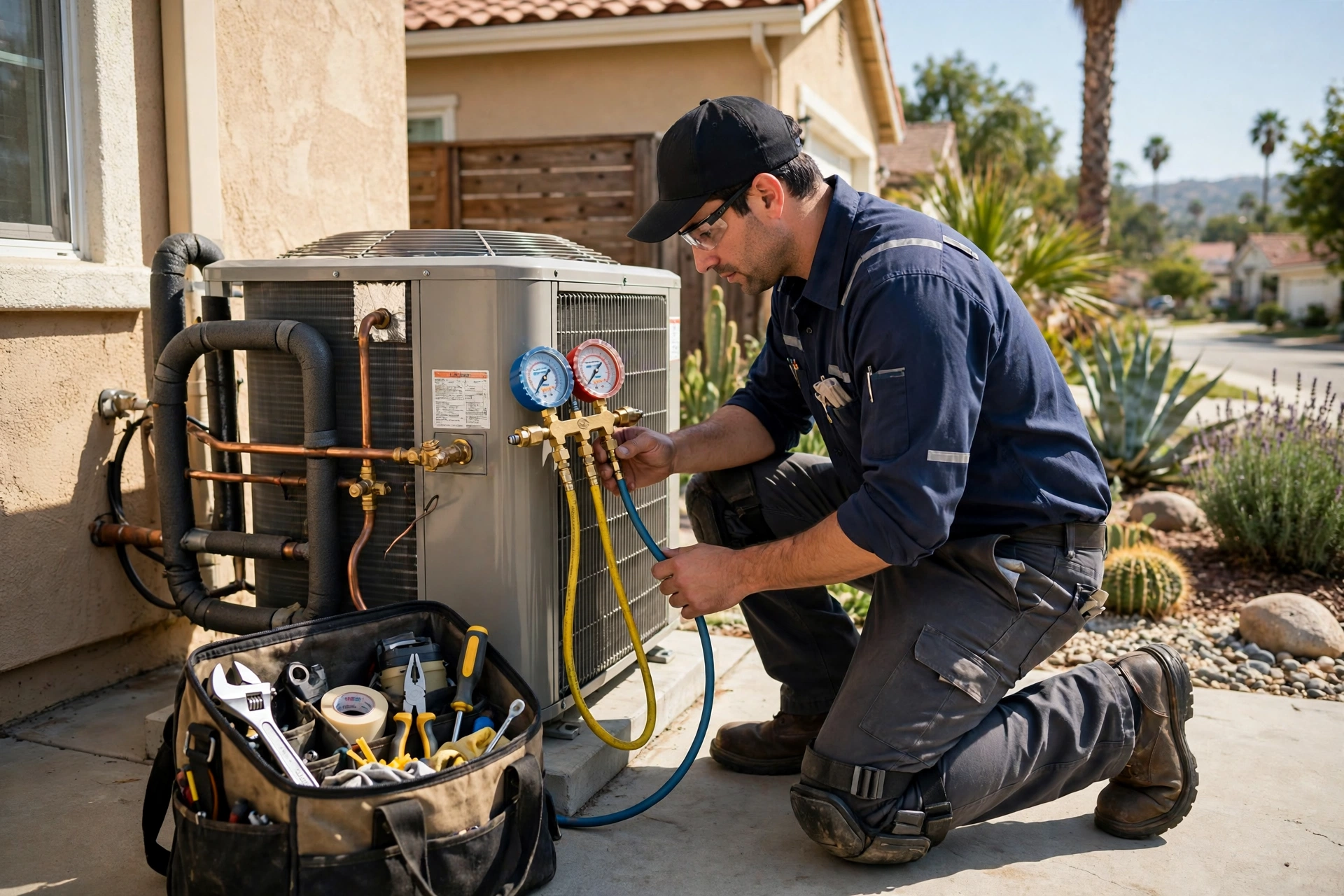
Water dripping from an air conditioner is alarming, and it is also one of the most common summer faults. The water usually comes from the condensate drain — the line that carries moisture out of the indoor unit — and when that line clogs, the water has nowhere to go but onto the floor below. The good news is that the cause is often simple, and the fix is often quick.
This guide explains where the water comes from, how the drain and trap work, why a frozen coil can turn into a leak, and when the leak is not the drain at all. It also covers what to do while you wait for a visit, so a small leak does not become a wet ceiling or a damaged floor.
Where the Water Comes From
An air conditioner pulls moisture out of the air as it cools, and that moisture collects on the cold indoor coil and drips into a drain pan below it. From the pan, a drain line carries the water outside or to a household drain. On a warm, humid day, a working system can produce several gallons of water, and all of it has to leave through that one small line.
When the line clogs, the pan fills and overflows, and the water appears at the indoor unit — dripping from the air handler, pooling on the floor, or staining the ceiling below. Callers describe it plainly: water is dripping from the air conditioner, or the air conditioner is leaking water on the first floor. The leak is the symptom; the clog is the cause.
The first step is to switch the system off. Running it while the drain is blocked only makes more water, and the pan will keep overflowing. Mop up what has already leaked, and note where the water is coming from — the indoor unit itself, a line running through the ceiling, or the outdoor unit — because the location narrows the cause.
The Condensate Drain and Trap
The condensate drain is a narrow line, and it clogs easily. Dust, algae, and mold grow inside it, and a line that has not been cleaned in years can narrow to a trickle. Callers ask for exactly this repair: the air conditioner drain is clogged and it needs to be cleared, or the drain is clogged and the unit is leaking because of it.
A technician clears the line with a vacuum or a flush, and checks the trap — the U-shaped bend that keeps air from blowing back through the drain. A trap that is clogged or dry can let air into the line and stop the water from flowing, even when the line itself is clear. Both are checked together, because a clear line with a blocked trap still overflows.
Some systems have a safety switch in the drain pan that shuts the air conditioner off when the water rises. That switch is doing its job: it stops the system before the pan overflows. If the system stopped and the pan is full, the drain is the first thing to check. Clearing the drain and the trap, and testing the switch, is a routine repair.
Some homes have a second line of defence: a secondary drain pan under the indoor unit, with its own safety switch. When the main drain clogs and the main pan fills, the water spills into the secondary pan, and the switch shuts the system off before the water reaches the ceiling below. If the system stopped and you find water in the secondary pan, the main drain is the fault, and the secondary pan did its job. The pan is checked for rust and cracks during a service visit, because a secondary pan that has corroded through cannot protect the ceiling it sits above. A secondary pan is common in homes where the indoor unit sits above a finished room, and in Aliso Viejo that means many attics and second-floor closets.
A Frozen Coil That Thaws Into a Leak
A frozen indoor coil can look like a drain problem, and it often ends as one. When airflow is restricted by a dirty filter, or refrigerant is low, the coil drops below freezing and ice builds on the fins. The system may keep running, cooling less and less, until the ice is thick enough to block airflow altogether.
When the system cycles off, the ice melts — and all of that water runs into the drain pan at once, faster than the line can carry it away. The pan overflows, and water appears below the indoor unit even though the drain is clear. Callers describe the sequence as ice buildup followed by water everywhere, and the two are the same fault.
If you see ice on the indoor unit, switch the system to fan-only and let the ice melt completely before running the cooling again. Then change the filter, and if the coil freezes again, arrange a visit: the cause is airflow or refrigerant, and both need testing. The drain is not the fault here — it is the victim of a coil that froze and thawed.
When the Leak Is Not the Drain
Not every leak comes from the drain. A cracked or rusted drain pan lets water through even when the line is clear, and a pan that has been in service for decades can corrode through at the seams. A disconnected drain line — knocked loose during other work in the attic or garage — dumps the water where the line used to carry it.
A refrigerant leak can also look like a water leak. When refrigerant escapes, the coil can freeze, and the thaw sends water onto the floor. The difference is the pattern: a drain leak is steady while the system runs, while a coil-freeze leak comes in a rush when the system cycles off. A technician separates the two by checking the coil, the refrigerant, and the drain together.
Water around the outdoor unit is a different matter again. The outdoor condenser does not produce condensate the way the indoor unit does, so water pooling around it usually comes from a drain line that ends nearby, or from the indoor unit leaking through a wall or ceiling. Tracing the water to its source is the first step, and the source is usually the indoor unit or its drain.
What to Do While You Wait for a Visit
Switch the system off and mop up the water. If the leak is coming through a ceiling, place a container under the drip and move anything that can be damaged by water. Do not run the air conditioner while the drain is blocked or the pan is full — the water will only keep coming, and a wet ceiling can sag or stain.
Check the filter and the drain line where you can reach them safely. A filter you can see light through is not the cause; a drain line you can see is kinked or disconnected is. Note where the water is coming from and when it started, and whether the system stopped on its own — a safety switch may have shut it off, which is useful information for the diagnosis.
A leaking air conditioner is a common call, and the repair is usually straightforward: a cleared drain, a new trap, a replaced pan, or a coil fault found and fixed. The water is the urgent part — the repair is the easy part. Shutting the system off and keeping the water contained is the right move while you wait.
Frequently Asked Questions
Why is water leaking from my air conditioner?
A clogged condensate drain or trap is the most common cause, and a frozen coil or a cracked drain pan can do the same. Shut the system off if water is pooling, and note where the water is coming from when you call.
What should I do first when my AC is leaking water?
Switch the system off and mop up the water. If the leak is coming through a ceiling, place a container under the drip and move anything that can be damaged by water. Do not run the air conditioner while the drain is blocked.
Can a frozen coil cause a water leak?
Switch the system to fan-only and let the ice melt completely before running the cooling again. Then change the filter, and if the coil freezes again, arrange a visit — the cause is airflow or refrigerant, and both need testing.
Can a condensate drain clog again after it is cleared?
Yes. A drain line that has not been cleaned in years can narrow with dust, algae, and mold until it barely flows. Clearing the line and the trap is a routine part of a tune-up.
My drain is clear but the unit still leaks. What else could it be?
A cracked or rusted drain pan lets water through even when the line is clear, and a disconnected drain line dumps the water where the line used to carry it. Both are checked when the drain itself tests clear.
Related Services
HVAC Repair in These Aliso Viejo Neighborhoods
More from the Blog
- Why Is My AC Not Cooling?
- AC Not Turning On: What to Check Before You Call
- Mini-Split Not Working? Common Causes and Fixes
- AC Repair or Replacement? How to Decide
For HVAC repair in Aliso Viejo, call (949) 555-0100 — 24/7 emergency line across Aliso Viejo.
HVAC Problem in Aliso Viejo? Call Now.
Inspection first. Honest answers. Repair and replacement by local providers.
Call (949) 555-0100