Aliso Viejo, CA • AC Repair
AC Repair in Aliso Viejo, CA
When the air conditioner stops cooling on a warm Aliso Viejo afternoon, the house heats up fast. We diagnose the fault, explain it in plain words, and repair central AC systems across Aliso Viejo.
24/7 emergency line • Local Aliso Viejo coverage • Clear diagnosis first
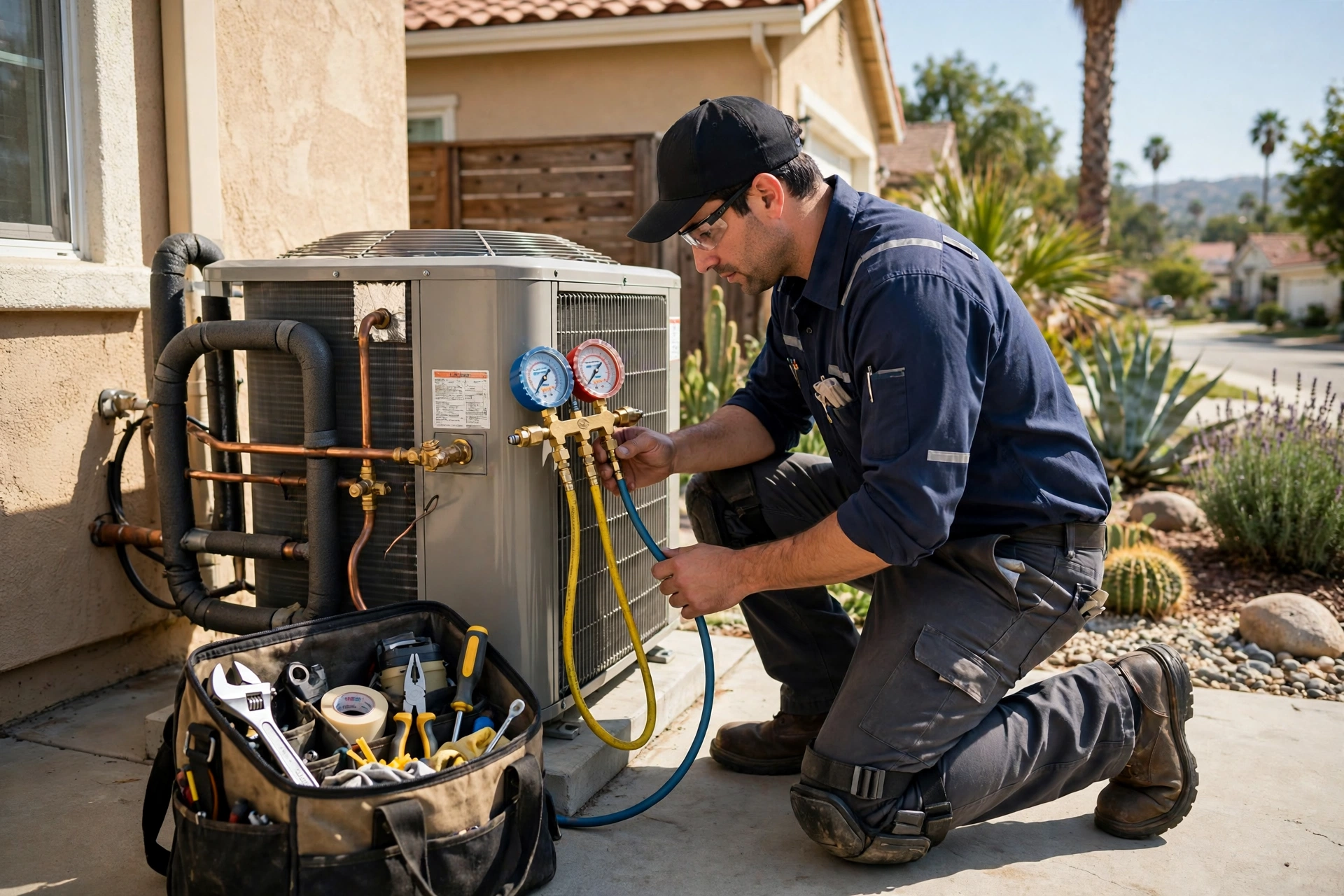
Aliso Viejo summers run warm, with highs of 78 to 85 degrees and inland heat waves that push into the 90s, so the air conditioner is the hardest-working system in most homes here. Most homes in Aliso Viejo were built between 1982 and the early 2000s, and many still run their original HVAC systems, now 25 to 40 years old.
AC repair starts with the symptom, not the part. A system that will not cool, one that will not turn on at all, and one that cools some rooms and not others are three different problems with three different causes. A repair visit narrows the fault down step by step: thermostat, power, airflow, refrigerant, and controls, before any part is changed.
AC Not Cooling in Aliso Viejo
Not cooling is the most common AC repair call in Aliso Viejo, and it has many causes. Callers describe it in plain words: the air conditioner is not cooling properly, the unit is running but it is not blowing cool air, or the thermostat is set at 72 but the house is not getting below 80. The words change, but the problem is the same: the system runs and the house stays warm.
Low refrigerant is one frequent cause, and it almost always means there is a leak somewhere in the system. A recharge without finding the leak only buys a short stretch of cool air before the level drops again. A technician checks pressures, looks for oil stains and frost at the coil and line set, and tests the system before deciding whether a repair or a recharge makes sense.
Airflow is the other half of cooling. A clogged filter, a dirty evaporator coil, or a blower that is not moving enough air will all leave the house warm even when the outdoor unit is running. The technician checks the filter, measures airflow at the vents, and inspects the coil before touching the refrigerant circuit.
AC Not Working at All
A system that will not turn on is a different fault from one that runs without cooling. Callers say the AC unit will kick on but it does not blow air. Power comes first in the check: the breaker, the disconnect at the outdoor unit, and the thermostat wiring.
The capacitor is the part behind many no-start calls in older Aliso Viejo systems. It gives the compressor and fan motors the push they need to start, and after decades of summer cycles it weakens and fails. A capacitor replacement is a common repair on 25 to 40 year old systems, and a technician tests it with a meter rather than guessing.
A fan that is not spinning is another no-air fault. The outdoor fan may be seized, the indoor blower may have a failed motor, or the control board may not be sending the signal to run. Each one is tested in turn, because the fix for a dead motor is different from the fix for a board that never calls the motor to start.
Water Leaks and Frozen Coils
Water around the indoor unit usually points to the condensate drain. Aliso Viejo air is dry, but a cooling coil still pulls moisture from the air, and that water has to drain away. When the drain clogs, water backs up into the pan and overflows onto the floor below, or drips from the unit itself.
A clogged condensate drain is one of the most straightforward AC repairs, and clearing it also protects the home from water damage. The technician clears the line, checks the trap, and confirms the water flows freely before leaving. A float switch, where one is fitted, is checked too, since it is designed to shut the system down before an overflow starts.
Ice on the indoor coil is a related fault. A frozen coil, or ice buildup on the lines, usually means low refrigerant or restricted airflow, and running the system while it is frozen only makes it worse. The ice has to melt fully before the system can be tested, and the underlying cause has to be fixed, or the coil will freeze again on the next warm afternoon.
Warm Air, Noises, and Uneven Cooling
An air conditioner that blows warm air instead of cool air may have a compressor that is not running, a reversing valve stuck in the wrong position, or a refrigerant charge that is too low. Callers say it is blowing warm air, or blowing hot air, and the fix depends on which part of the cooling cycle has stopped working.
Noises are useful clues. A howling noise from the outdoor unit, a hissing noise near the coil, or a loud rattle all point to different faults, from a failing fan bearing to a refrigerant leak. A hissing sound with warm air is worth attention, because it can mean refrigerant is escaping from the line set or the coil.
Uneven cooling is common in two-story Aliso Viejo homes, where the upstairs rooms run warmer than the ground floor. Some of that is ductwork and airflow, and some of it is a system that is undersized for the heat load upstairs. A technician measures temperatures room by room to find where the cooling is being lost.
What an AC Repair Visit Covers
- Thermostat settings, wiring, and batteries checked first.
- Breaker, disconnect, and power supply confirmed.
- Capacitor, contactor, and fan motors tested with a meter.
- Filter condition and airflow measured at the vents.
- Refrigerant pressures checked and leaks located.
- Condensate drain cleared and water flow confirmed.
Frequently Asked Questions
Why is my AC running but not cooling the house?
The usual causes are low refrigerant, a dirty coil or filter choking airflow, or a compressor that is not running. A technician checks airflow first, then refrigerant pressures, because each cause needs a different fix.
My AC unit will kick on but it does not blow air. What is wrong?
That usually points to the indoor blower motor, the capacitor, or the control board. The technician tests each one in turn to find which part is not doing its job.
Why is water leaking from my indoor AC unit?
The condensate drain is usually clogged, so water backs up and overflows from the drain pan. Clearing the line and checking the trap and float switch stops the leak.
Why does my AC keep tripping the breaker?
A breaker that keeps tripping when the AC runs often means a failing compressor, a shorted capacitor, or a fan motor drawing too much current. The breaker should not be reset again and again without a diagnosis, because the underlying fault can damage the system.
What does a frozen AC coil mean?
Ice buildup on the coil usually means low refrigerant or restricted airflow. The ice has to melt fully before the system can be tested, and the cause has to be fixed or the coil will freeze again.
Should I get a Freon recharge or a repair?
A recharge alone only helps if the refrigerant level dropped without a leak, which is uncommon. If there is a leak, the leak has to be found and repaired, or the system will lose refrigerant again.
HVAC Repair in These Aliso Viejo Neighborhoods
This service is available across Aliso Viejo, including:
- HVAC Repair in Glenwood, Aliso Viejo, CA
- HVAC Repair in Pacific Ridge, Aliso Viejo, CA
- HVAC Repair in Westridge, Aliso Viejo, CA
- HVAC Repair in Canyon Vistas, Aliso Viejo, CA
Related Services
Call (949) 555-0100 any time — 24/7 emergency line — to talk through your HVAC problem in Aliso Viejo and book a visit.
HVAC Problem in Aliso Viejo? Call Now.
Inspection first. Honest answers. Repair and replacement by local providers.
Call (949) 555-0100